
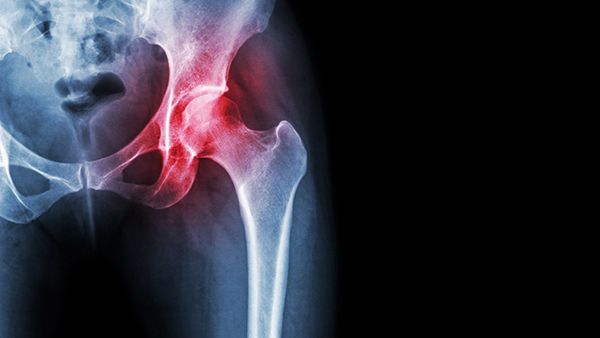
Hip pain can come from many different sources, and the right treatment depends entirely on the cause. Two people with similar symptoms may have completely different problems inside the joint. If you live in Manchester, Rochdale or elsewhere in Greater Manchester, this condition by condition guide explains the hip problems a specialist hip surgeon commonly assesses, how each tends to feel and the range of treatments that may help you.
Why an Accurate Diagnosis Matters
Your hip is a ball and socket joint that carries your body weight with every step. Pain may arise from the joint surface, the bone beneath it, the soft tissues around it or, after surgery, an implant. Our hip anatomy page explains how these parts fit together. Identifying exactly which structure is involved is the first step to choosing treatment that works.
Osteoarthritis of the Hip
Osteoarthritis is the most common type of arthritis in the UK.1 It happens when the protective cartilage on the ends of your bones breaks down, causing pain, swelling and difficulty moving the joint.1 The knees and hips are among the joints most often affected.1
How it feels: A deep ache in the groin or thigh, stiffness after resting and gradually reducing walking distance.
Treatment options: Exercise, weight management and pain relief first, then injection therapies such as cortisone injections for some patients. When symptoms substantially affect your quality of life, a total hip replacement may be discussed. Our page on hip arthritis covers this in more depth.
Inflammatory Arthritis
Rheumatoid arthritis is an autoimmune condition in which the immune system attacks the lining of the joints, making them swollen, stiff and painful.2 Over time, this can damage cartilage and nearby bone.2 Although it more often affects the hands, feet and wrists, it can involve the hip.2
How it feels: Pain and stiffness that may come in flares, often alongside tiredness.
Treatment options: Medical treatment is usually led by a rheumatologist. A hip surgeon becomes involved when joint damage causes persistent pain or loss of function, sometimes requiring complex primary hip replacement.
Avascular Necrosis
Avascular necrosis occurs when part of the bone in the ball of the hip loses its blood supply. Without blood flow, the bone weakens and can eventually collapse, leading to arthritis.
How it feels: Groin pain that may begin suddenly and worsen with weight bearing, sometimes progressing quickly.
Treatment options: Early diagnosis with appropriate imaging is important. Depending on the stage, management may range from monitoring and activity changes to hip replacement once the joint surface has collapsed.
Hip Dysplasia in Adults
Developmental dysplasia of the hip is often found in babies, but symptoms sometimes do not start until late childhood, puberty or adulthood if the condition was mild and not treated at birth.3 A shallow socket places extra stress on the cartilage, which can lead to earlier arthritis. Our page on hip dysplasia explains the condition further.
How it feels: Groin pain, a limp or a clicking, snapping or popping feeling when you move the joint.3
Treatment options: Where arthritis has developed, a complex primary hip replacement may be needed because the shape of the socket is unusual.
Hip Bursitis
Hip bursitis is inflammation of a bursa, one of the fluid filled sacs that cushion the joints.4 It is common in the hips and often settles with simple treatment within a few weeks.4
How it feels: Pain on the outer side of the hip, often worse when lying on that side or climbing stairs.
Treatment options: Rest, ice and painkillers, then physiotherapy or a steroid injection if symptoms persist. NHS advice is to see a GP if symptoms have not improved after 1 to 2 weeks of self care.4
Hip Fractures and Trauma
A broken hip is serious and needs hospital treatment straight away.5 It usually follows a fall or injury and is more common in older people and those with osteoporosis.5
How it feels: Pain in the hip, upper leg and groin, inability to stand or put weight on the leg, and sometimes a leg that looks shorter or turned outwards.5
Treatment options: Surgical fixation or replacement, depending on the fracture. Our fractures and trauma page explains more about this area of care.
A Failing or Painful Hip Replacement
Most hip replacements last many years, but some eventually need further surgery. Common reasons include infection, loosening of the implant over time and instability or dislocation.
How it feels: New or returning pain, a sense of the hip giving way, clicking, swelling or, with infection, feeling generally unwell.
Treatment options: A careful assessment with imaging and sometimes blood tests, followed where needed by revision hip replacement.
Frequently Asked Questions
Which hip condition is most common in adults?
Osteoarthritis is the most common form of arthritis in the UK and a frequent cause of hip pain in adults.1
Can you have hip dysplasia as an adult without knowing?
Yes. Mild dysplasia may not cause symptoms until adulthood, when it can present as groin pain or clicking.3
Do you always need surgery for a hip condition?
No. Many conditions, including bursitis and early arthritis, are managed without surgery. Surgery is considered when other treatments are not helping.
Where can you be assessed for hip conditions in Greater Manchester?
Private hip assessments take place at The Highfield Hospital in Rochdale, which welcomes patients from Manchester and across Greater Manchester.
What should you bring to a hip appointment?
Bring a list of your medicines, any previous imaging reports and details of past treatments. Our first visit page explains what to expect.
Find the Cause of Your Hip Pain in Manchester
Whatever is behind your hip pain, a clear diagnosis is the foundation of good treatment. If you would like a specialist opinion, you are welcome to contact our team at The Highfield Hospital in Rochdale.
References
- NHS. Osteoarthritis.
- NHS. Rheumatoid arthritis.
- NHS. Developmental dysplasia of the hip.
- NHS. Bursitis.
- NHS. Broken hip (hip fracture).
Mr. Daniel R. Cohen is a Consultant Trauma and Orthopaedic Surgeon specialising in hip and knee surgery, including primary and revision joint replacement, minimally invasive procedures, and complex trauma care. He serves as the Hip and Knee Replacement Lead Surgeon for the Northern Care Alliance NHS Group and is an Honorary Senior Lecturer at the University of Salford. He is committed to delivering evidence-based, patient-centred care while contributing to orthopaedic research and surgical education.